
Pay not listedApply (opens in new tab)
The human side of robotics
Jobs checked 2 hrs agoPilot robots from a VR headset, record everyday tasks, or label what robots see. Real openings from 60 employers, checked every day.


Every listing is re-checked daily at 06:00 UTC. How we verify
Pick as many as you like. The jobs below update as you choose.
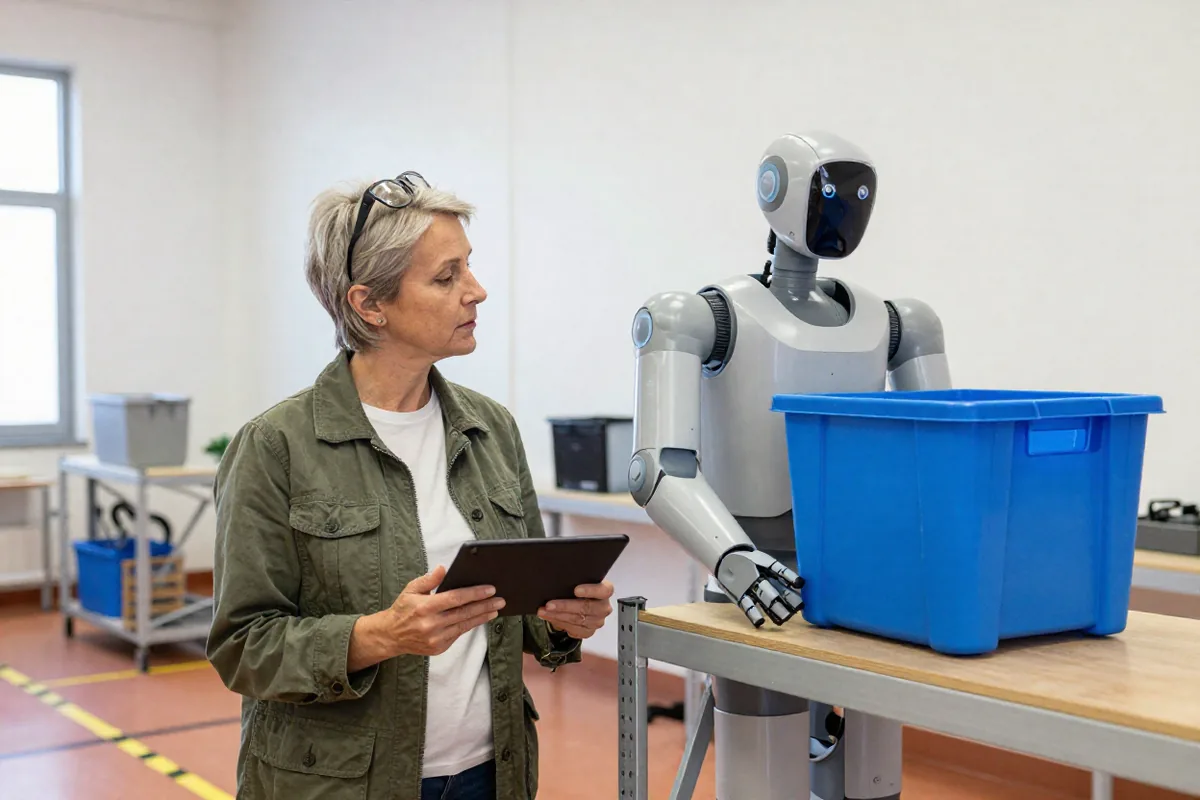
Photos show typical examples. Equipment and tasks vary by employer.
Compare all 7 types of workRemote jobs can still have country restrictions. Partners receive priority.
These employers take contributors without a specific job post. Check eligibility and how each one pays.

Figure Index
Get paid by the minute to record everyday tasks at home for Figure's humanoid dataset. Over $15M paid to Creators so far.

Micro1
PartnerReview robot-task video or record physical tasks for robotics data projects.

DoorDash Tasks
Get paid through DoorDash's Tasks app to film everyday activities and record audio that help train AI and robots.

Instawork
A staffing app whose recording projects pay people to film everyday chores for robot training.

Tesla (Optimus)
Data Collection Operators wear a motion-capture suit and VR headset to train the Optimus humanoid.

Perle
Wear a headstrap with your phone, press record, and go about your day: paid per accepted hour of first-person video for robot training.

Prolific
Get paid to take part in robotics and physical-AI studies: rating robot videos, comparing robot motions, and annotating physical scenes.

1X Technologies
Data-collection operators who run 1X's humanoid robots in VR to collect training data.

OpenTrain AI
A marketplace that already aggregates robot-teleoperation and video-capture gigs.

Atlas Capture
An iPhone app that pays you for approved hours of first-person video of everyday chores, recorded with your phone on a head strap.

TSMG
Staffed robotics collection and autonomous-vehicle testing assignments for client programs.

Figure AI
Humanoid robot operators and Helix data creators collecting the demonstrations behind Figure's Helix model.

Skild AI
Robot Operators following teleoperation and data-collection procedures across US and India sites.

Serve Robotics
Remote supervision coordinators and field ops keeping sidewalk delivery robots running.

Gatik
Worker roles include Autonomous Vehicle Test Driver and Autonomous Truck Test Driver, collected from the employer's live hiring board.

Anduril Industries
Worker roles include UAV Operator, Bolt and Flight Test Operator, collected from the employer's live hiring board.

Avride
Safety Drivers supervising autonomous delivery robots and vehicles.
The newest robot-training roles in one weekly email, with pay when the employer lists it. Free, unsubscribe anytime.
We email new roles, not spam. One click to unsubscribe.
What does it actually pay?
Our data report measures what robot training work pays, from the live listings, updated daily.
Read the pay reportNew to this work? See how it works.
The tracked USD hourly sample has a $22–$32/hr band and a $26/hr median, based on 82 distinct advertised rates across 25 employers. 630 of 723 listings do not disclose an hourly rate. This is advertised gross pay in a selected sample, not representative earnings. Per-task programs and salaries use different units.
You sign up with an employer that hires people to train robots (piloting a robot by teleoperation, recording demonstration or first-person video, or annotating what its sensors see), pass a short screening, then get paid by the hour or the shift. RobotTraining.jobs pulls live openings from the 89 employers that publish job feeds and compiles pay across all 105 it tracks, so you can compare what each pays and apply in one click.
No. Many roles (recording first-person video on wearables, teleoperating robots in VR, basic data annotation) can accept beginners, but location and screening requirements vary by employer. A trade skill, a clinical or industrial background, or a Part 107 drone certification unlocks the highest-paying evaluation and operator work.
Eligibility depends on the listing. Of the 723 tracked openings, 4% are marked remote and 48% explicitly list only the US. Remote does not mean worldwide: country restrictions and work authorization may still apply. Listings with unknown eligibility remain visible in the country filter, so check the employer's requirements before applying.
Yes. The employers listed here are real robotics companies (humanoid labs, autonomous-vehicle fleets, and data-collection networks) that pay contributors, though pay, shift volume, and reliability vary widely between them. Each employer page shows what it pays, how it pays out, and its worker reputation so you can judge before signing up.
Some links on RobotTraining.jobs are referral links. If you sign up through one, RobotTraining.jobs may earn a commission at no extra cost to you. It never changes what a platform pays you.