Robot training work
Robot Video Annotation Jobs
Based on 7 different posted rates, from 6 employers. 10 of these 17 openings give no hourly figure. Advertised USD hourly sample only, not a representative wage survey. Missing rates may bias the result in either direction.
In-depth guide: How to Get Paid for Remote Robot Training Work (2026)
Data Annotation roles open now
Updated 1 Nov 2026, 06:01 UTCSome links here are referral links: when you join an employer through one, RobotTraining.jobs may receive a commission. It costs you nothing, and the employer pays you exactly the same.
 $9/hr

In-House Creator (opens the job details)
Genesis AI · Bay Area, United States· 1d agoDetails
 $35–$45/hr
 CAD 40,100-48,100/yr
 $40–$120/hr

QA Reviewer, Data Annotation (opens the job details)
Mind Robotics · Palo Alto, United States· 1w agoDetails


Data Services Analyst II, Labeling (Contract) (opens the job details)
Latitude AI · Pittsburgh, PA, United States· 1mo agoDetails
 $4.03/hr
Data Annotation Specialist (opens the job details)
Dyna Robotics · Redwood City, CA, United States· 5mo agoDetails
$32/hr $87,000–$118,000/yr

Label the data robots perceive the world through: 3D bounding boxes in LiDAR point clouds, sensor-fusion and segmentation, and action, affordance, and trajectory labels on egocentric and robot video. Still the most accessible remote entry point, but geography-priced: the same task pays a US floor and an offshore fraction of it, and the simplest labeling is compressing as auto-labeling improves.
How contested these jobs are
From 4 Oct 2026 to 31 Oct 2026, Embodied-AI Data Annotation roles drew 15% of the apply clicks on RobotTraining.jobs while making up 1.1% of the time roles were open, so each opening drew 13.12x the attention of an average role. More people chase each opening than in most kinds of work: apply early and match the posting's asks closely.
Measured from apply clicks on this site, not from hires. Every kind of work compared.
Data Annotation alerts
Get new Data Annotation roles by email
Each week we gather the latest paid Data Annotation openings from every employer we follow, with the hourly rate where it is posted, and send them in one email. No cost, and you can stop any time.
Only job openings, nothing else. Unsubscribing takes one click.
In short
Embodied-AI Data Annotation. Label the data robots perceive the world through: 3D bounding boxes in LiDAR point clouds, sensor-fusion and segmentation, and action, affordance, and trajectory labels on egocentric and robot video. Typical 2026 pay is $7–$75/hr. The live median is $30/hr, taken from the 6 employers posting a rate for it today. Hiring for it: 19 employers, among them Sovrano AI, Dyna Robotics, Sama.
The job, up close
Label what a robot sees
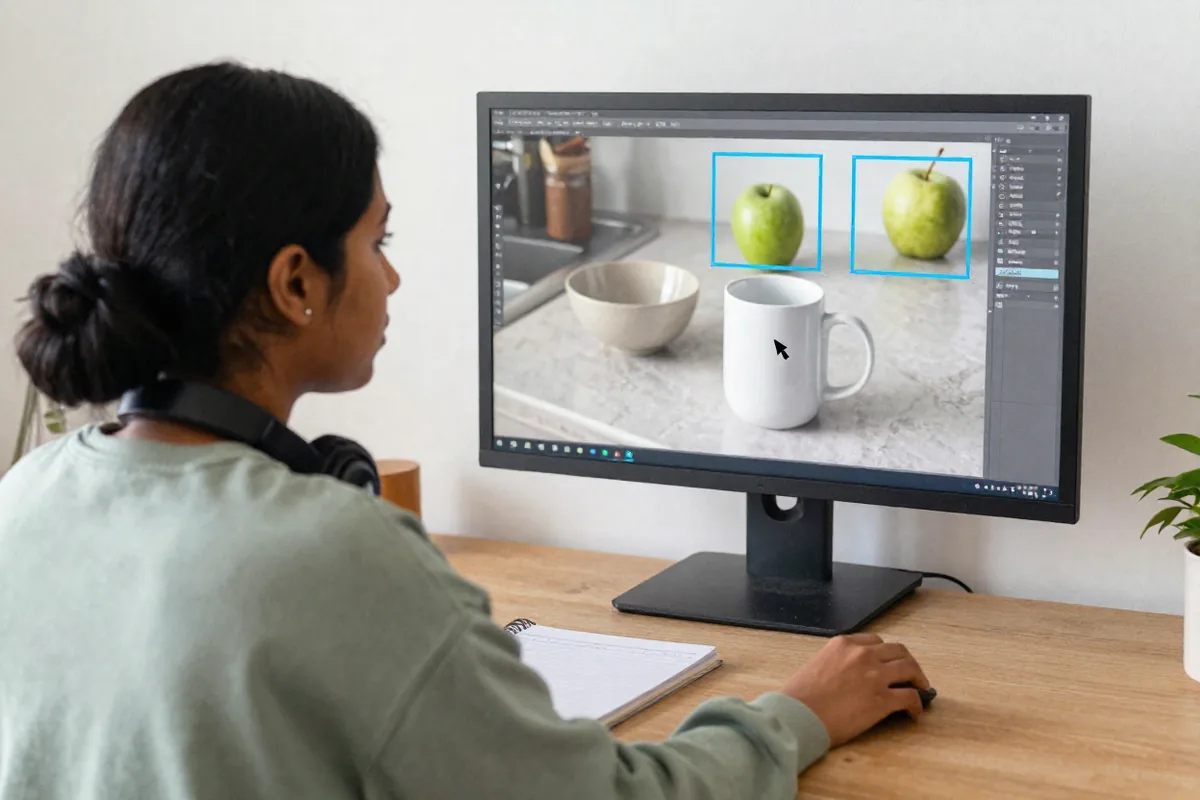
Work on a screen to label objects, actions, or sensor data. Your labels help a robot interpret its surroundings.
- A sample task
- Draw a box around a cup in a camera frame or mark when a hand picks it up.
- Workplace
- Computer-based; remote or on-site, depending on the employer
- Tools and kit
- A computer and the project’s annotation software
Employers hiring for data annotation












Sorted by what an application there is likely worth to you, with a referral lift for employers that pay us a referral fee; your pay is never affected.
Want more context? Line up data annotation pay at every employer in the pay explorer.
Rather have companies come to you?
Fill in a single profile and any robot training employer can reach you through us. When a company needs someone in a certain city or country, or holding a license or certificate, and you fit, we put you forward, but only after you say yes. It costs nothing.
Written by Yuma Heymans, Founder & CEO of RobotTraining.jobs.
Runs RobotTraining.jobs and AITraining.jobs as founder and CEO, and co-founded HeroHunt.ai, an AI recruitment platform. San Francisco based, and for years focused on how the people who teach robots and AI systems are found, hired and paid.
Embodied-AI data annotation is the work of labeling the raw sensor data that physical robots and self-driving systems learn to see the world through. Where a chatbot learns from labeled text, a warehouse robot, a humanoid, or an autonomous vehicle learns from labeled 3D point clouds, fused camera and LiDAR frames, and video of human hands and machines doing real tasks. Someone has to draw the cuboid around every pedestrian in a spinning LiDAR scan, color every pixel of drivable road, and tag the exact frame where a gripper closes on a cup. That someone is an embodied-data annotator, and it is still the most accessible remote entry point into robot-training work.
What the work actually is
Annotation for embodied AI is more three-dimensional and more physical than the text-and-image labeling that trains language models. The core task families:
- 3D bounding boxes (cuboids) in LiDAR point clouds. You place a tight 3D box around each vehicle, pedestrian, cyclist, and obstacle in a point cloud, then track that same object across a sequence of frames so the model learns motion. This is the backbone of autonomous-vehicle perception.
- Sensor fusion. The same scene is captured by LiDAR, radar, and several cameras at once. You label objects consistently across all of them so the model can fuse the views. This is harder, and pays more, than single-sensor work.
- Semantic and instance segmentation. Coloring in every point or pixel that belongs to a class (road, sidewalk, pole, person). Slower and more precise than boxes.
- Action, affordance, and trajectory labels on video. On robot-arm and egocentric video, you mark where a task begins and ends, which object is grasped, the path a hand or gripper follows, and whether an attempt succeeded. This is the labeling that feeds the vision-language-action models the humanoid labs are racing to build.
Embodied annotation rewards spatial reasoning and patience with 3D tools far more than writing skill. In the robot-training pipeline it sits right next to demonstration and data collection: they capture the data, you turn it into ground truth.
What it pays
Read from today's open roles. 17 open roles on RobotTraining.jobs are in embodied-AI annotation, and 7 of them state an hourly rate. Those rates typically run $7 to $75 an hour, with a median of $30 an hour. They come from individual postings with different duties and locations, not from a category-wide wage survey; the pay explorer and pay report show the full measured sample and its coverage.
| Employer | Open roles | Of those, stating an hourly rate |
|---|---|---|
| All employers | 17 | 7 |
| Welo Data | 2 | 2 |
| HireArt | 1 | 1 |
| Alignerr | 1 | 1 |
| micro1 | 1 | 1 |
| Dyna Robotics | 1 | 1 |
| Figure AI | 1 | 1 |
| Skild AI | 1 | 0 |
An advertised hourly amount is gross compensation, not verified take-home earnings. Salary, equity, benefits, overtime and contractor expenses must be compared separately. We do not infer what a beginner or an expert earns by splitting a pay distribution into tiers.
For accepted-footage or task payments, include setup, recording, upload, review and any rework in your time calculation. An hour of accepted video is a unit of output, not necessarily an hour of labor. There is no guaranteed volume of accepted tasks or paid hours.
Who hires for it
Two very different channels hire embodied annotators.
The robot and AV builders themselves. They increasingly keep annotation in-house because label quality is a competitive edge. Figure AI lists a Data Quality Analyst alongside its robot operators; Skild AI hires master annotators; Tesla staffs data-operations roles for Optimus, and Agility Robotics and Boston Dynamics run their own data-ops teams. These pay US wages and sometimes carry benefits, but usually expect on-site or hybrid work in a specific city.
The annotation networks. These recruit remote contributors worldwide and price by geography. Scale AI, Sama, and Objectways run point-cloud and sensor-fusion pipelines behind many autonomous-vehicle and robotics programs. This is the accessible, work-from-anywhere door, but it is also where the geography gap and the labor-practice scrutiny concentrate: Scale AI was investigated by the US Department of Labor over how it classifies and pays its contractors; the department dropped that probe in May 2025, and private lawsuits over wages and classification were still pending when it did.
Tools, skills, and how to start
You do not need a degree. You need reliable internet, a computer that can smoothly render 3D point clouds (a discrete GPU helps for LiDAR work), and the patience to hit both a speed target and an accuracy target at the same time. The everyday tools are browser-based 3D suites: point-cloud cuboid editors, segmentation brushes, and video timelines for action labeling. Most networks gate you behind a short unpaid qualification task, then start you on simple 2D boxes before promoting you to 3D and sensor-fusion work, which is where the pay actually climbs.
A realistic path: pass a network's assessment, build speed on 2D and simple cuboid work, then qualify for sensor-fusion or QA and evaluation tiers, or apply directly to a robot lab's in-house data-operations team once you can show you understand 3D geometry and consistent, sequence-stable labeling. Many workers keep their hours full by pairing annotation with egocentric capture, which uses an overlapping skill set.
The trend that changes the floor
Auto-labeling is real, and it is compressing the simplest work. Models now pre-label a point cloud or pre-segment an image, and the human job shifts from drawing every box to reviewing, correcting, and resolving the edge cases the model gets wrong. That is good for pay per hour of skilled review and bad for anyone hoping to earn on sheer volume of easy boxes. The durable niches are 3D sensor fusion, ambiguous safety-critical scenes, and action or trajectory labeling on novel robot tasks: exactly the work that is hardest to automate. Before you commit your hours, compare the pay across every robot-training role on RobotTraining.jobs's live pay explorer.
Common questions
How much does embodied-AI data annotation pay?
Pay is specific to the role, location and payment model, so read the posting. Today 7 of the 17 open embodied-AI annotation roles on this site's board state an hourly rate, and those rates typically run $7 to $75 an hour with a median of $30. That is the board's own measured band, not a market-wide wage survey; the pay explorer shows the full sample.
Do I need a degree or prior experience?
No. You need reliable internet, a computer that can render 3D point clouds smoothly (a discrete GPU helps for LiDAR work), and the discipline to hit a speed and an accuracy target at once. Most networks gate you behind a short unpaid qualification task, then start you on 2D boxes before promoting you to higher-paying 3D and sensor-fusion work.
How is this different from regular text or image data labeling?
Embodied annotation is three-dimensional and physical. Instead of tagging words or flat images, you draw 3D cuboids in LiDAR point clouds, label the same object across fused camera, radar, and LiDAR views, segment scenes pixel by pixel, and mark actions and trajectories on robot and egocentric video. It rewards spatial reasoning far more than writing skill.
Is the pay really lower offshore?
Often, yes. Annotation networks that recruit worldwide price by where the worker lives, and this site's board shows the spread: the roles that state a rate typically run $7 to $75 an hour, from projects open to workers in lower-income countries to US on-site annotation roles. Press reporting finds the same pattern, such as The Standard's report on Nairobi data workers labeling for about $12 an hour. Check the posting's location and unit of pay before you compare two rates.
Will auto-labeling take these jobs away?
It is compressing the simplest work. Models now pre-label point clouds and pre-segment images, so the human role is shifting from drawing every box to reviewing and correcting the model's edge cases. The durable, better-paid niches are 3D sensor fusion, ambiguous safety-critical scenes, and action or trajectory labeling on novel robot tasks, which are hardest to automate.
Who hires for embodied-AI annotation?
Two channels. Robot and AV builders such as Figure AI, Skild AI, Tesla, Agility Robotics, and Boston Dynamics increasingly keep annotation in-house at US wages, usually on-site or hybrid. Annotation networks like Scale AI, Sama, and Objectways recruit remote contributors worldwide and price by geography, which is the accessible work-from-anywhere door but also where labor-practice scrutiny concentrates.
Sources
- Figure AI careers: Humanoid Robot Operator roles, $26 to $35/hr by role (Greenhouse board)
- The Conversation: the invisible, exploited AI data workforce (offshore rates)
- The Standard: Nairobi data workers labeling for about $12/hr
- TechCrunch: Scale AI under US Department of Labor investigation (March 2025)
- TechCrunch: the Department of Labor dropped its investigation into Scale AI (May 2025)
From the forum
Ask the people doing Data Annotation work what only they can tell you.
The research behind this page
The figures here come from the same daily read of employers' job boards, and from sourced datasets, that our research reports publish with their method, their sources and a citation for every figure.
- Embodied-AI Data Annotation: Hiring and Pay Market Report
Which employers recruit for Embodied-AI Data Annotation, what rates do they advertise, how crowded is each opening, and who is eligible?
17 open roles on 31 Oct 2026
- Which Robot Training Jobs Draw the Most Applicants
Which robot training roles do job seekers click to apply for, and which ones struggle to find applicants?
536 apply clicks
- Robot Training Pay Structures: Hourly, Per Task or Salary
Do robot training jobs pay hourly, per task or video, or a salary, under what kind of contract, and on what payout schedule?
87% of roles with a pay figure set it per hour
- Requirements in Robot Training Job Postings
What do robot training roles require: a degree, a driver's license, a CDL, a drone certificate, a minimum age, lifting, a background check?
1,150 open roles with a full description read